
An R34 GT-R is not arriving at Importify. An M-Spec Nür is. For the collectors who watch this corner of the Japanese performance world, that difference is the entire point.
The Skyline GT-R lineage ran from 1989 to 2002 across three chassis (R32, R33, R34) and ended deliberately. Nissan didn't let the model fade out; they sealed it with a closing chapter that has, two decades on, become the most desired era of Japanese performance manufacturing. The 2002 Nür models are the final word of that chapter.
The Final Run
By February 2002, Nissan had announced that BNR34 production would end in August. Rather than let the platform trail off, the engineering team developed two send-off specifications under the “Nür” badge, named after the Nürburgring, the German circuit that had shaped so much of the R34's calibration. The Nür package wasn't a sticker job. It was a different car, built on different intent.
Two variants were offered:
- V-Spec II Nür: the track-focused build, with stiffer suspension, a carbon bonnet lip, and the aggressive aero treatment derived from the R34's GT-Press racing program.
- M-Spec Nür: the touring-focused build, with softer Ripple Control dampers, leather and heated seats, and a cabin oriented toward distance rather than lap times.
Approximately 1,003 Nür cars were built in total. The V-Spec II Nür accounts for the majority, around 718 units. The M-Spec Nür is rarer still: just 285 cars left the production line.
Mizuno's Spec
The “M” in M-Spec stands for Mizuno: Kozo Mizuno, the chief engineer who led the R34 GT-R development program. The M-Spec wasn't an afterthought. It was Mizuno's personal interpretation of what a high-speed grand touring GT-R should feel like: a car that could cross continents on the autobahn at three figures, but also absorb a back road without battering its driver.
That meant Ripple Control dampers tuned for a slightly softer secondary ride, revised stabiliser bars, leather upholstery, and a heated front-seat system rarely seen in a homologation-spec GT-R. The M-Spec retained the GT-R's full all-wheel-drive ATTESA E-TS Pro system and Active LSD. None of the chassis intelligence was dialled back. What changed was the texture of the experience, not the capability beneath it.
The Nür Engine
What unified both Nür variants, and what makes them the most collectible R34s, is the engine. The Nür package included the factory N1-derived RB26DETT block: strengthened internals, redesigned turbocharger compressors and turbines for greater boost durability, an upgraded oil pump, and a higher rev limit. Officially rated at the JDM-mandated 280 ps, the Nür-spec RB26 is widely understood to produce closer to 330 ps and beyond from the factory, with significantly more headroom than the standard car.
The Nür-engined GT-Rs are the definitive RB26: the last evolution of an engine that defined an era of Japanese performance, in its most factory-engineered form.
Millennium Jade
If the M-Spec Nür is the rarest GT-R variant of the final run, Millennium Jade (paint code JW0) is the rarest hue. Offered exclusively on Nür cars, this deep, almost military green-gold is one of the most distinctive colours Nissan ever applied to a production vehicle. It does not look the same in two different lights. In overcast Tokyo greys, it reads as a brooding pewter-green. In direct sun, it glows with an unmistakable warm-jade shimmer.
Millennium Jade was not a high-take-rate colour at the time of production. Most buyers in 2002 chose Bayside Blue, White Pearl, or Black Pearl. That reluctance is exactly why Millennium Jade examples are now the most sought-after R34 GT-Rs in the global market. They are the rarest of an already rare car, in the rarest paint.
Why Values Have Climbed
A decade ago, R34 GT-Rs were collectible. Five years ago, they were investment-grade. Today, the conversation around an M-Spec Nür in Millennium Jade is no longer “what is it worth?” but “where is one available?” Genuine low-kilometre, auction-graded examples have crossed seven figures at major Japanese and international auctions multiple times over the past two years, and the rate of upward movement has not slowed.
Three forces drive this. First, the supply is fixed and shrinking. Just 285 M-Spec Nürs were ever built, and clean examples leave private collections rarely. Second, the eligibility of these cars to enter the United States under the 25-year import rule begins in 2027, broadening demand to one of the largest collector markets in the world. Third, the cultural weight of the R34 GT-R has only grown, appearing in film, video games, and the broader iconography of a generation that now has the means to own one.
The Car Arriving at Importify
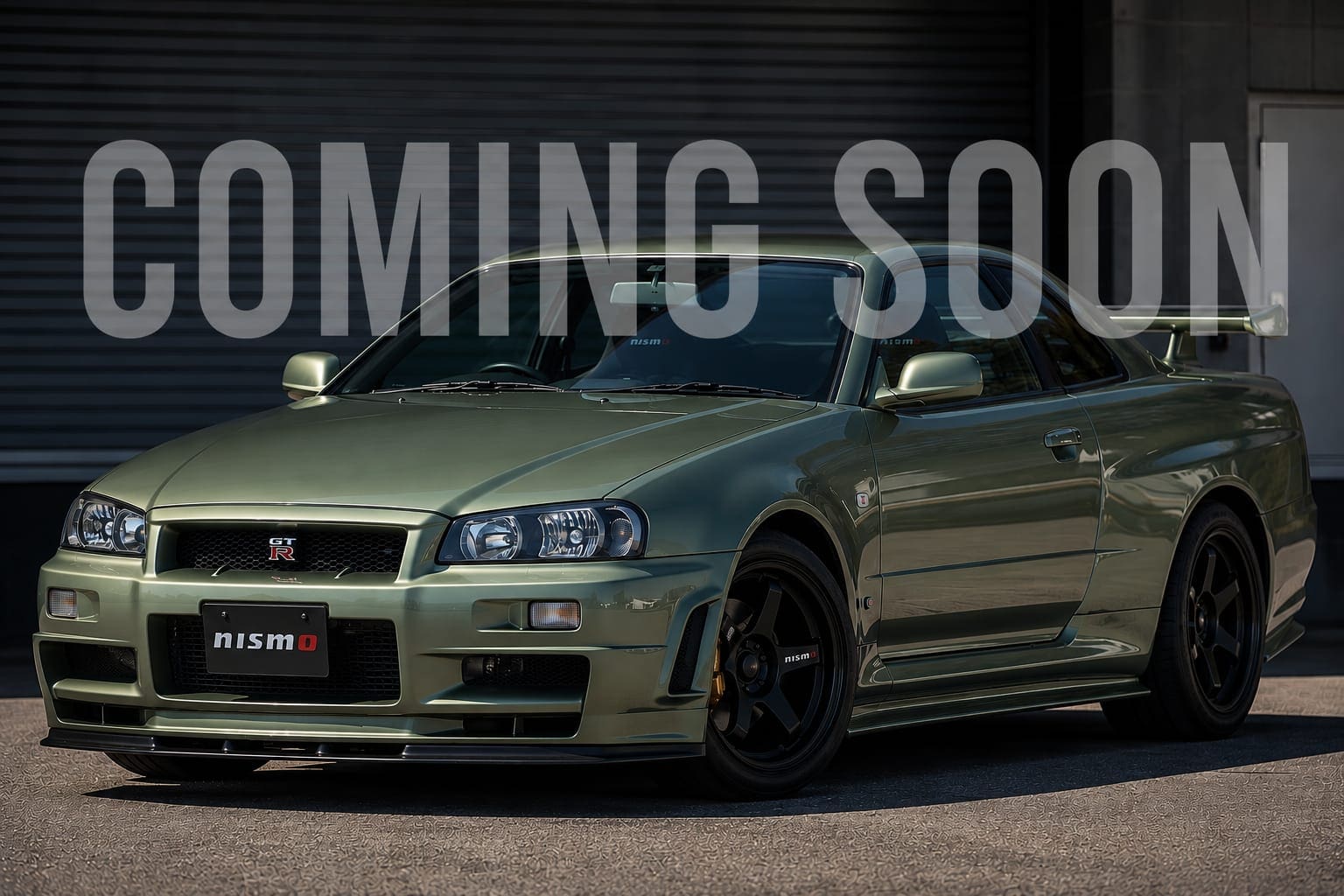
We are bringing in a 2002 M-Spec Nür finished in Millennium Jade, showing just 13,000 verified kilometres from new, with auction grade 4.5 and a clean, original presentation throughout. It is a genuine collector-grade example of one of the most significant Japanese performance cars ever produced.
Detailed photography, inspection notes, and full provenance will be published with the listing as the car completes its journey to New Zealand.
The purchase made national news. Read the NZ Herald's coverage of the car and what makes it a million-dollar motor.
To register early interest or request priority notification when the listing goes live, please contact our team.